So far, we have been talking in terms of projects only. There are two other terms that are closed linked with projects and project management. They are: Program and Portfolio. In this chapter, we are going to look at how these 3 entities are related.
So, lets get started!!!
Relationship between Project, Program and Portfolio:
As a project manager, you should know the basic concepts of program and portfolio and how they are related to each other and to projects. A program may be a part of a higher-level program; it certainly contains some interrelated projects, and it may contain some non-project work as well. Program management focuses on optimally managing the interdependencies among the various projects in the program. The person who manages a program is called the Program Manager.
The program manager’s responsibilities are:
Just like a project is managed by a project manager, a program is managed by a program manager, who oversees the projects and provides high-level guidance to the project managers. In other words, a program manager oversees projects and coordinates efforts between projects but does not manage the projects.
Why is that?
That is because; we the project managers are managing our projects!!!
A portfolio contains both programs and projects and is managed by a portfolio manager. The portfolio is drawn directly from the strategic business plan of the organization.
The strategy of an organization is an action plan to achieve its business goals and objectives. It’s also called a strategic plan or a strategic business plan. The strategy determines the portfolio of projects and programs that the organization will execute. A portfolio is a set of projects, programs, or both that is managed in a coordinated fashion to obtain control and benefits not available from managing them individually.
What is Portfolio Management?
Portfolio management is the centralized management of one or more portfolios, and it includes identifying, prioritizing, authorizing, managing, and controlling projects, programs, and other related work in order to obtain specific strategic business objectives of the organization. Just as a program is managed by a program manager, a portfolio is managed by a portfolio manager.
To understand the relationship between these 3 entities, projects, programs and portfolios we need to understand that:
Portfolio management focuses on making sure that programs and projects are prioritized for resources to serve the organization’s strategy. In simpler terms, a portfolio manager worries about the success of the whole strategy put forth by the organization rather than the success of a single project (like what we do)
Therefore, investment decisions are usually made at the portfolio level. Program management focuses on achieving the benefits that would be aligned with the portfolio and hence with the strategic objectives of the organization. So, a portfolio is part of the interface between the programs and strategic business objectives of the organization for which the programs are run.
The relationship between these 3 entities is better explained by the picture below:
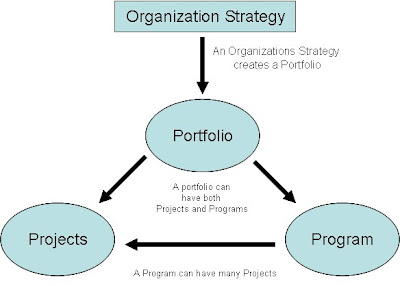
As you can see in the picture above, a portfolio is composed of projects, programs or both. And a program consists only of projects.
When compared to projects and programs, a portfolio is closer to an organization’s business objectives, and therefore this is where most of the investment decisions are made.
It’s also important to note that an operation is not part of a project. However, a program can include a non-project work. Similarly, a portfolio can also include work that is not included in any of its constituent projects and programs.
Let us wrap up this chapter with a comparison between projects, programs and portfolios.
Comparison between a Project, a Program, and Portfolio

Previous: Environmental Factors & Process Assets
Next: Other Terms Related to Project Management
So, lets get started!!!
Relationship between Project, Program and Portfolio:
As a project manager, you should know the basic concepts of program and portfolio and how they are related to each other and to projects. A program may be a part of a higher-level program; it certainly contains some interrelated projects, and it may contain some non-project work as well. Program management focuses on optimally managing the interdependencies among the various projects in the program. The person who manages a program is called the Program Manager.
The program manager’s responsibilities are:
• Prioritize to resolve resource conflict and constraints that affect multiple projects within his program.
• Keep your priorities aligned with the strategic goals and objectives of the organization.
• Resolve issues and manage change within the governance structure of the organization.
Just like a project is managed by a project manager, a program is managed by a program manager, who oversees the projects and provides high-level guidance to the project managers. In other words, a program manager oversees projects and coordinates efforts between projects but does not manage the projects.
Why is that?
That is because; we the project managers are managing our projects!!!
A portfolio contains both programs and projects and is managed by a portfolio manager. The portfolio is drawn directly from the strategic business plan of the organization.
The strategy of an organization is an action plan to achieve its business goals and objectives. It’s also called a strategic plan or a strategic business plan. The strategy determines the portfolio of projects and programs that the organization will execute. A portfolio is a set of projects, programs, or both that is managed in a coordinated fashion to obtain control and benefits not available from managing them individually.
What is Portfolio Management?
Portfolio management is the centralized management of one or more portfolios, and it includes identifying, prioritizing, authorizing, managing, and controlling projects, programs, and other related work in order to obtain specific strategic business objectives of the organization. Just as a program is managed by a program manager, a portfolio is managed by a portfolio manager.
To understand the relationship between these 3 entities, projects, programs and portfolios we need to understand that:
• If an organization does not have any programs but has only individual projects, all these projects can be grouped into one or more portfolios.
• If an organization has programs and no individual project external to all programs, all these programs can be grouped into one or more portfolios.
• If an organization has some programs and some individual projects, all these programs and projects can be grouped into one or more portfolios.
Portfolio management focuses on making sure that programs and projects are prioritized for resources to serve the organization’s strategy. In simpler terms, a portfolio manager worries about the success of the whole strategy put forth by the organization rather than the success of a single project (like what we do)
Therefore, investment decisions are usually made at the portfolio level. Program management focuses on achieving the benefits that would be aligned with the portfolio and hence with the strategic objectives of the organization. So, a portfolio is part of the interface between the programs and strategic business objectives of the organization for which the programs are run.
The relationship between these 3 entities is better explained by the picture below:
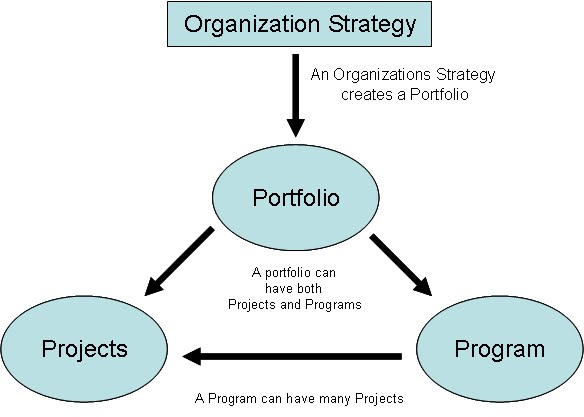
As you can see in the picture above, a portfolio is composed of projects, programs or both. And a program consists only of projects.
When compared to projects and programs, a portfolio is closer to an organization’s business objectives, and therefore this is where most of the investment decisions are made.
It’s also important to note that an operation is not part of a project. However, a program can include a non-project work. Similarly, a portfolio can also include work that is not included in any of its constituent projects and programs.
Let us wrap up this chapter with a comparison between projects, programs and portfolios.
Comparison between a Project, a Program, and Portfolio
Previous: Environmental Factors & Process Assets
Next: Other Terms Related to Project Management


